Now working with Fortune 100 companies.

Replace the Platform. Keep the Business Running.

We build the new system behind the one you run today and move it over one piece at a time, so your customers never see the switch. Fixed price per milestone, paid when you accept it, and the code is yours.
Tier-1
Transaction systems our engineering leadership has migrated with zero downtime
Fixed
Price per milestone, paid when you accept the work
Yours
Code in your repository, running on your cloud
What Staying Put Costs

The Old Platform Is Now the Riskiest Thing You Run

It still takes the orders. It still closes the books. But every year it stays in place, three costs grow.

You Fall Behind

Competitors ship in weeks. Your roadmap waits on a platform that takes a quarter to change and a specialist to touch. The gap shows up in the product long before it shows up in the numbers.

Outages Get Expensive

1 in 5

major outages now costs more than $1 million (Uptime Institute, 2026). Old platforms tend to fail at peak, in ways the current team has never seen.

Attackers Start With Old Code

31%

of breaches now start with an exploited vulnerability, up from 20% a year earlier and now the most common way in (Verizon DBIR, 2026). Software nobody can patch is where they look first.

The usual answer is a big-bang rewrite: freeze the old system, spend two years building its replacement, then switch everything over in one weekend. It is also the riskiest answer. BCG found that 70% of digital transformations fall short of their objectives (BCG, 2020).

What Changed

Replacing a Platform Took Years. Most of That Was Reading.

Before anyone could build the new system, someone had to understand the old one: decades of code, business rules nobody wrote down, and edge cases one person remembers. That discovery routinely ate the first year. It doesn't anymore.

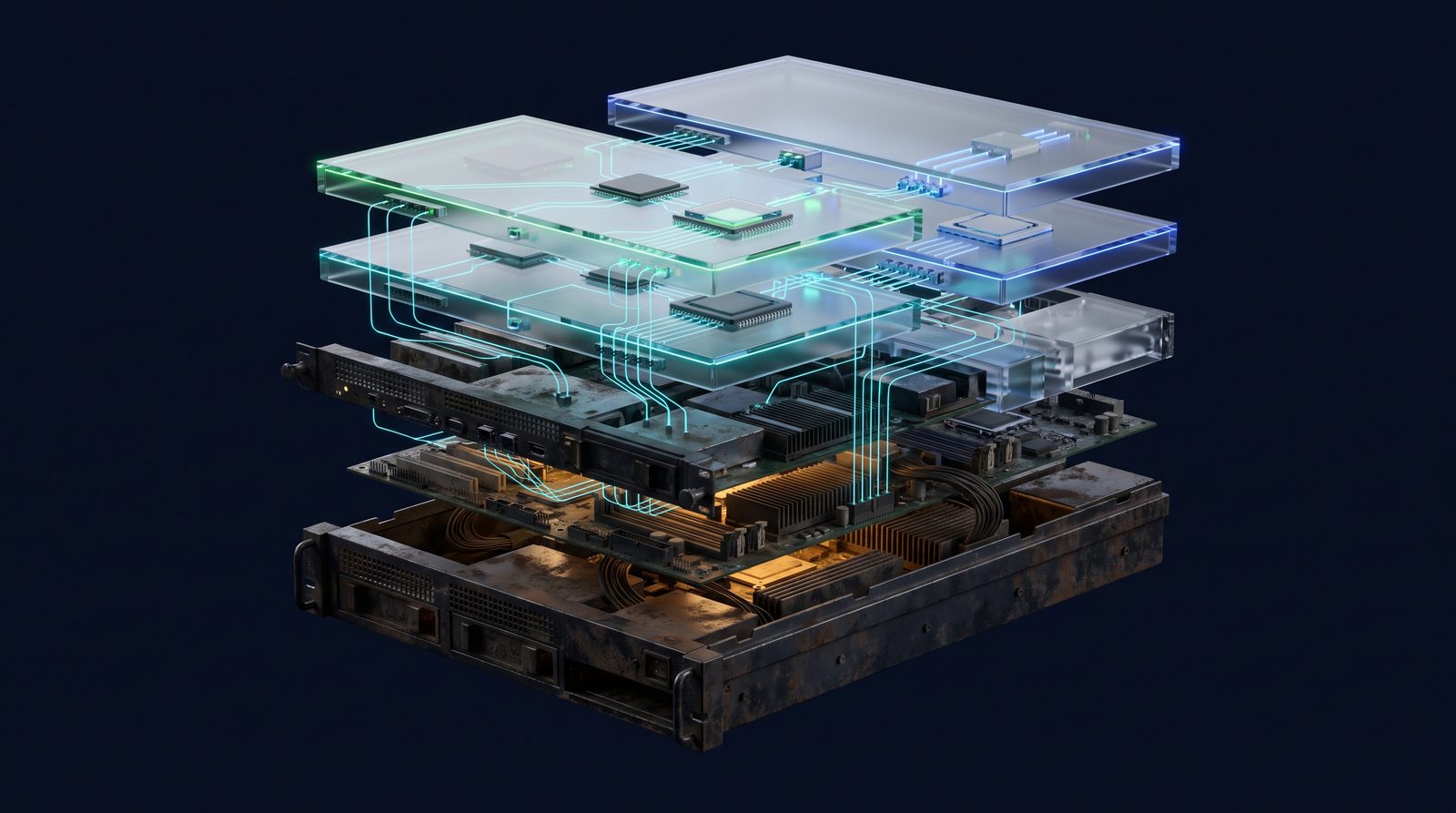
Exploded view of an aging server pulled apart layer by layer, with glowing lines tracing its connections and the upper layers rebuilt in clean glass
  • AI reads the old code. It maps every dependency and writes down the business rules buried in the logic, so discovery takes weeks instead of months.
  • Senior engineers make the calls. Our engineering leadership has migrated Tier-1 transaction systems to active-active AWS with zero downtime. AI writes code. People who have run these platforms decide the architecture.
  • Every change clears the same gate. Tests, coverage, security and license checks run on every line before it merges.
  • Nothing gets thrown over the wall. Documentation and a runbook are written as the system is built, and your engineers work alongside ours.
Watch

Replacing a Platform, in 90 Seconds.

How we learn what an old system does, decide what to keep, and replace the rest one slice at a time while the business keeps running.

How the Switch Works

One Piece at a Time, While the Business Runs

The same loop runs for each piece of the platform. You can stop after any of them.

  1. 01

    Map It

    We map the old system and agree with you which piece moves first. Usually it's the one costing the most or carrying the most risk.

  2. 02

    Build Beside It

    The replacement is built next to the running system, against acceptance criteria you signed off in writing before work started.

  3. 03

    Run Both

    Live traffic is split between old and new, and the results are compared. Nothing switches until the new piece matches or beats the old one.

  4. 04

    Cut Over

    Traffic moves to the new piece. The old path stays on standby, so a rollback is a routing change, not a rebuild.

  5. 05

    Retire It

    The old component is switched off and your team gets the code, docs and runbook for the new one. Then the next piece starts.

Our Commitments

The Delivery Risk Sits With Us

✓

Fixed Price Per Milestone

Each milestone is priced before work starts. Fixed price is our default, and time-and-materials is available where your contracting requires it. If the scope changes, we agree the change with you in writing first.

✓

Paid When You Accept It

You pay for a milestone when it meets the acceptance criteria you set. Until it does, we rework it at no extra cost.

✓

Your Code, Your Cloud

The code lives in your repository and runs in your cloud accounts. Ownership of each milestone's work passes to you when it is paid.

✓

No Lock-In

Take the work in-house at any milestone. Documentation and runbooks are deliverables, not extras.

✓

Your Code Never Trains a Model

The AI models we use run under zero-retention, no-training terms.

Sound Familiar?

Where Engagements Usually Start

The Rewrite That Stalled

An internal replacement started two years ago. The old system is still running, the new one isn't finished, and you're paying for both. We keep the parts worth keeping and finish the move one piece at a time.

The Checkout Nobody Will Touch

Your highest-revenue flow runs on code that gets frozen every peak season because nobody trusts a change to it. We put it behind a router and replace it path by path, with the old version on standby.

The Platform Behind an Audit Finding

Unsupported components keep showing up in security reviews, and patching them means touching code nobody understands. We replace the exposed pieces first.

The Data Center Exit

The lease or the hardware contract has an end date, and the system was never built for the cloud. A lift-and-shift just moves the problem. We rebuild the parts that need to change and move the rest.

Questions

What Buyers Ask Us First

Where do our code and data go?

They stay in your environment. The work runs in your repositories and cloud accounts, and the AI models we use run under zero-retention, no-training terms. Our Trust & Security page has the details your security team will want.

Who owns the new system?

You do. The code is in your repository from the start, and ownership of each milestone's work passes to you when it is paid.

What does our team do during the move?

Your engineers set and sign off the acceptance criteria, join the reviews, and learn the new system while it's being built. Handover happens in steps, not on one day.

What if Codavyn is unavailable partway through?

Continuity is written into the contract. And because the code, documentation and runbook are in your hands at every milestone, your team or another firm can pick up where we stopped.

How do we start?

With a paid pilot: one piece of your platform, replaced and running in production. The pilot fee is credited in full toward the rest of the program.

Start With One Piece.

Tell us which part of the platform worries you most. We'll come back with a scoped pilot: that piece replaced and running in production, with the fee credited in full toward the program.

Related Solutions