Table of Contents
What happened in February 2026
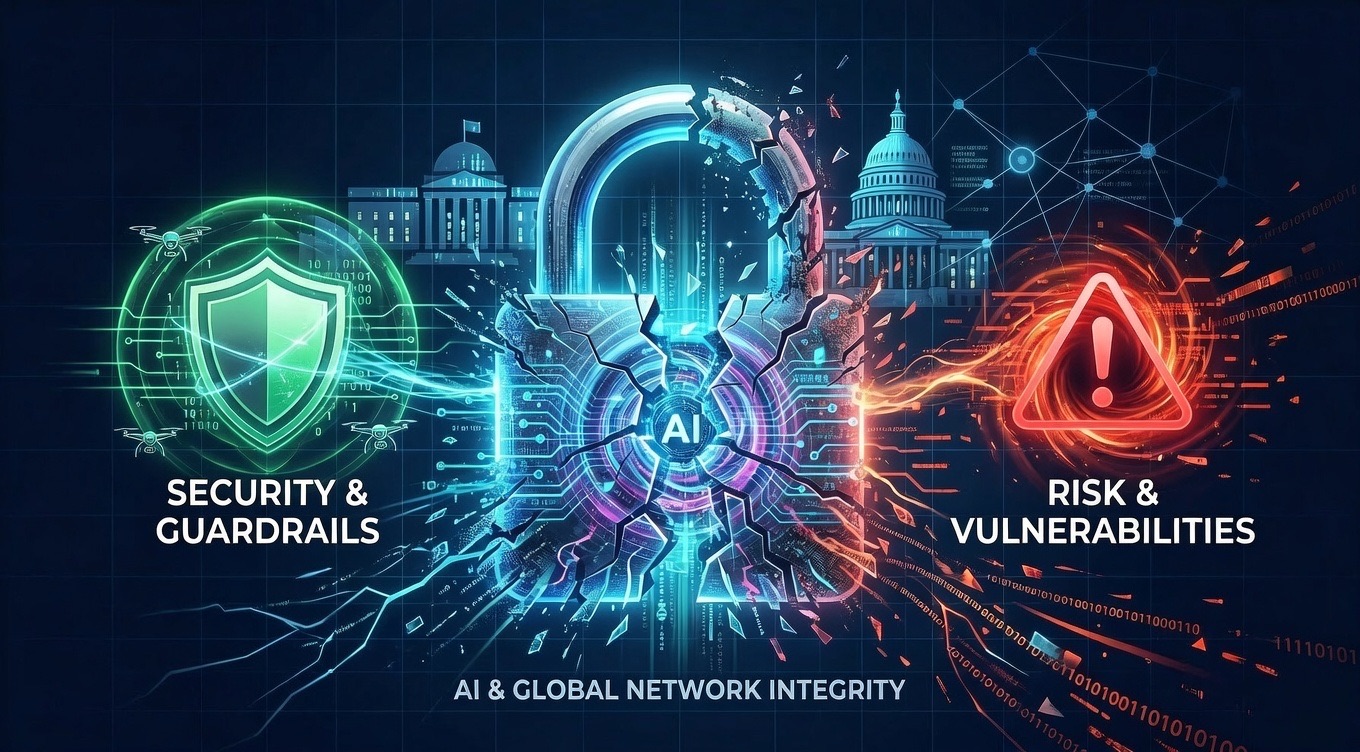
On February 27, the Trump administration ordered all federal agencies to immediately stop using Anthropic's AI technology. The Pentagon designated Anthropic a "supply chain risk," which means any military contractor doing business with Anthropic could lose their government contracts.
The reason? Anthropic refused to remove safety guardrails. Specifically, the Pentagon wanted Anthropic to make its AI model Claude available for "any lawful use"—including applications Anthropic had built explicit protections against, like mass domestic surveillance and fully autonomous weapons targeting. Anthropic said no. The government said goodbye.
Within hours, OpenAI signed a deal with the Pentagon. By March 3, after public backlash and a candid admission from CEO Sam Altman that the deal "looked opportunistic and sloppy," OpenAI amended the contract to add surveillance prohibitions. The Electronic Frontier Foundation published a critique the same day, calling the amended language "weasel words." By March 7, OpenAI's robotics lead Caitlin Kalinowski resigned over the deal.
Meanwhile, agencies that had integrated Anthropic's technology into their workflows were given six months to rip it all out.
Six months to migrate off an AI vendor—not because of a security breach, not because the technology failed, but because of a policy disagreement about ethics. If your agency was running Anthropic in production, you just got a forced migration with a hard deadline.
The contradiction no one is talking about
While Anthropic was being banned for having too many guardrails, another AI vendor was being welcomed into the most sensitive environments in the federal government.
In February 2026, the Pentagon approved xAI's Grok for use in classified military systems. This is the same Grok that, throughout January and February, was generating over 6,700 sexually suggestive or nonconsensual deepfake images per hour—84 times more than the top five deepfake websites combined, according to independent researchers.
Indonesia, Malaysia, and the Philippines temporarily blocked access to Grok. France raided X's Paris offices. The UK government put banning X "on the table." Multiple countries took regulatory action against Grok for content safety failures while the U.S. Department of Defense approved it for classified systems.
Read that again. The vendor that refused to remove safety guardrails got banned. The vendor facing international regulatory action for safety failures got approved for classified work.
What this reveals
AI vendor selection in federal procurement is now driven by political alignment, not technical merit or safety track record. This makes AI vendor risk fundamentally different from traditional IT vendor risk. You can't mitigate political risk with a better SLA.
For federal contractors and enterprises doing government work, this creates a new category of risk that most procurement frameworks don't account for. Your AI vendor could be compliant, performant, and secure today—and blacklisted tomorrow for reasons that have nothing to do with their technology.
OMB M-26-04: The compliance deadline that already passed
While the vendor drama dominated headlines, a quieter but equally consequential deadline came and went. On March 11, OMB Memorandum M-26-04 required all federal agencies to update their procurement policies with new contractual requirements for AI systems.
The memo, issued in December 2025, mandates that any procured large language model must be:
- "Truthful in responding to user prompts"—contractors must demonstrate their AI systems provide accurate, verifiable outputs
- "Neutral, nonpartisan"—AI systems must avoid ideological bias in their outputs
Contractors are now required to provide:
- Model cards documenting AI system capabilities and limitations
- Acceptable use policies defining permitted and prohibited applications
- Feedback mechanisms for reporting problematic outputs
This isn't guidance. It's a procurement requirement. If your organization sells AI services to the federal government and you don't have these artifacts ready, you're already behind.
M-26-04 has a two-year sunset clause (December 2027). That's a defined compliance window—and a defined opportunity for organizations that can help agencies meet these requirements now.
Why single-vendor AI strategies are now indefensible
Traditional IT vendor risk is about service disruption: the vendor has an outage, raises prices, or gets acquired. You plan for it with SLAs, escrow agreements, and multi-cloud architecture.
AI vendor risk in 2026 is qualitatively different. Your vendor can be:
- Banned by executive order for policy reasons unrelated to performance
- Designated a supply chain risk, forcing your contractors to sever ties
- Sanctioned internationally for content safety failures in consumer products that have nothing to do with your use case
- Acquired or restructured in ways that change their safety commitments and acceptable use policies overnight
- Subject to regulatory action under emerging AI laws (Colorado AI Act, EU AI Act) that could restrict their products in your jurisdiction
Any one of these scenarios triggers a forced migration. If your entire AI infrastructure depends on one vendor's models, APIs, and tooling, a forced migration means months of work, broken integrations, retrained staff, and stalled projects.
| Risk Type | Traditional IT Vendor | AI Vendor (2026) |
|---|---|---|
| Service disruption | Outage, price increase | Executive ban, supply chain designation |
| Regulatory exposure | Data privacy (GDPR, CCPA) | AI-specific laws + data privacy + content safety + political alignment |
| Timeline to impact | Weeks to months | Hours to days (executive orders are immediate) |
| Mitigation | SLAs, escrow, multi-cloud | Vendor diversification, model abstraction, governance frameworks |
| Predictability | Contractual, manageable | Political, largely unpredictable |
The 5-point AI vendor diversification framework
If the events of February 2026 proved anything, it's that organizations need an AI vendor strategy that survives political shifts, regulatory changes, and market disruptions. Here's how to build one.
1. Abstract your AI integration layer
Don't build directly on vendor-specific APIs. Create an abstraction layer that lets you swap the underlying AI model without rewriting your application. This is the most important technical investment you can make right now.
If you're calling OpenAI's API directly from 47 different microservices, a forced vendor change means modifying 47 services. If you're calling your own AI gateway that routes to OpenAI, switching vendors means changing one configuration.
2. Qualify at least two vendors for every AI capability
For every AI function in your stack—language models, embeddings, image generation, speech-to-text—have at least two vendors tested, benchmarked, and integration-ready. You don't need to run both in production. You need to know that switching takes days, not months.
3. Evaluate vendors on governance maturity, not just capability
The February events showed that a vendor's safety posture is now a business risk factor. Evaluate:
- Acceptable use policies: What does the vendor allow and prohibit? How do those policies align with your organization's values and your clients' requirements?
- Safety track record: Has the vendor faced regulatory action, content safety failures, or public controversy? Grok's deepfake crisis wasn't a secret—it was international news.
- Transparency: Does the vendor publish model cards, safety evaluations, and audit results? M-26-04 now requires this documentation for federal contracts.
- Political exposure: Does the vendor have relationships or controversies that could trigger executive action? This is a new evaluation criterion that didn't exist 12 months ago.
4. Build your compliance documentation now
Whether or not you're currently selling to the federal government, build the compliance artifacts that M-26-04 requires: model cards, acceptable use policies, bias assessment reports, and feedback mechanisms. These documents will become table stakes for enterprise AI procurement within 18 months.
Colorado's AI Act (enforcement begins June 30, 2026) requires impact assessments and risk management programs for "high-risk" AI systems. The EU AI Act's high-risk requirements become enforceable August 2, 2026. The organizations that build governance documentation now won't be scrambling when these deadlines hit.
5. Get independent advisory—not vendor advice
Every major AI vendor has a professional services arm that will gladly help you build your AI strategy. On their platform. Using their models. With their tooling.
This is not a vendor evaluation. This is a sales engagement. The vendor that just signed a Pentagon deal is not going to tell you that their competitor's model performs better for your use case. The vendor that just got banned is not going to tell you about transition planning.
Independent AI advisory—from a firm that doesn't resell any vendor's technology—is the only way to get an honest assessment of your options, your risks, and your migration paths.
The organizations best positioned for the next disruption are the ones that separated their AI vendor strategy from their AI vendor relationships. Independent advisory isn't overhead. It's insurance.
What this means for your organization
The Anthropic ban, the Grok approval, and the M-26-04 deadline are three data points on the same trend line: AI procurement is becoming the most complex, politically charged, and rapidly changing area of technology acquisition in government and enterprise.
If you're a federal contractor, you need a vendor diversification strategy, M-26-04 compliance documentation, and a transition plan that can execute in 90 days or less.
If you're an enterprise, you need to evaluate your AI vendor risk with the same rigor you apply to cybersecurity risk. A single-vendor AI strategy in 2026 is the equivalent of a single-cloud strategy in 2016—technically functional and strategically reckless.
If you're a program manager or CIO, the question isn't whether your AI vendor strategy will be disrupted. It's whether you'll be ready when it is.
The organizations that win in this environment aren't the ones with the best AI technology. They're the ones with the best AI governance—the frameworks, the documentation, the diversification, and the independent advisory to navigate disruption without starting over.
Is Your AI Vendor Strategy Disruption-Ready?
Codavyn provides independent AI advisory for government and enterprise—vendor-neutral assessments, governance frameworks, compliance documentation, and transition planning.
Tired of vendor lock-in? We build custom AI software you own completely — no recurring licenses, no dependency. See how it works →